Uhl-Bien et al (2014) Followership theory: A review and research agenda. The Leadership Quarterly.
Treatment of followers in leadership research.
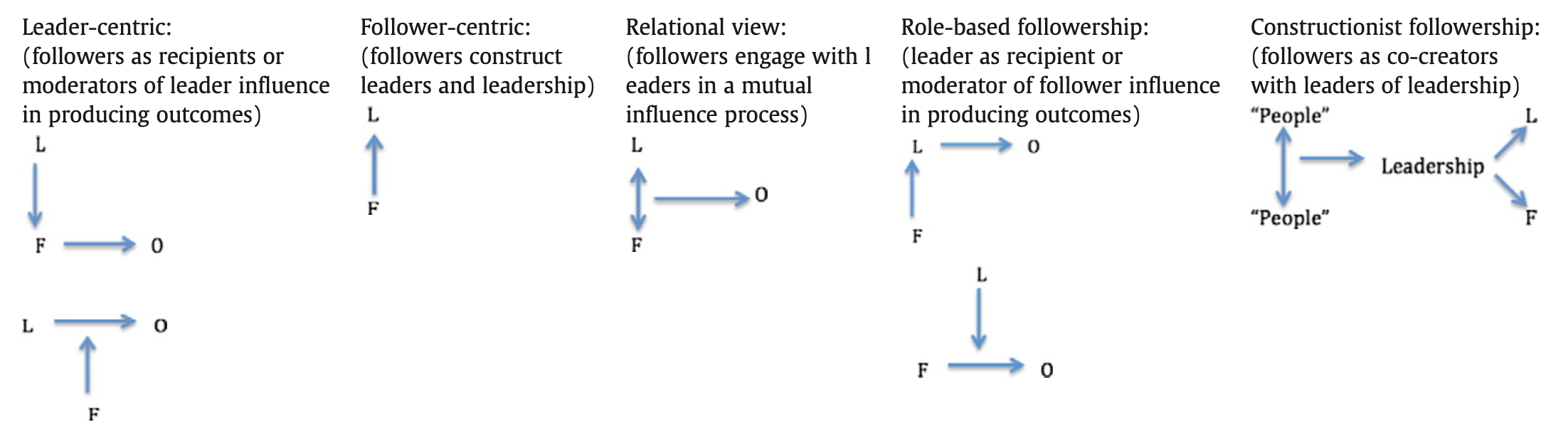
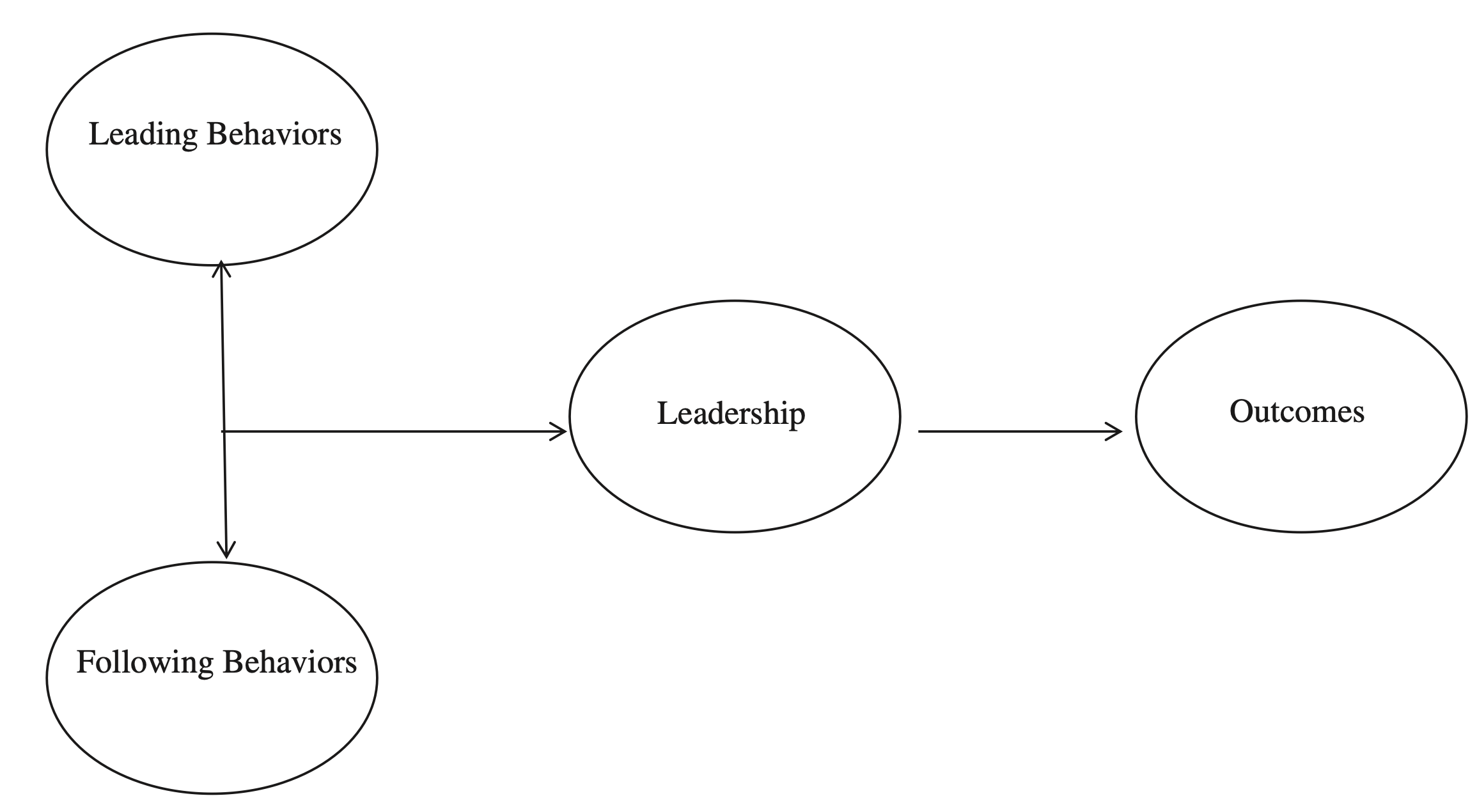
The leadership process
Kelley (1988) In Praise of Followers. Harvard Business Review.
Not all corporate success is due to leadership…
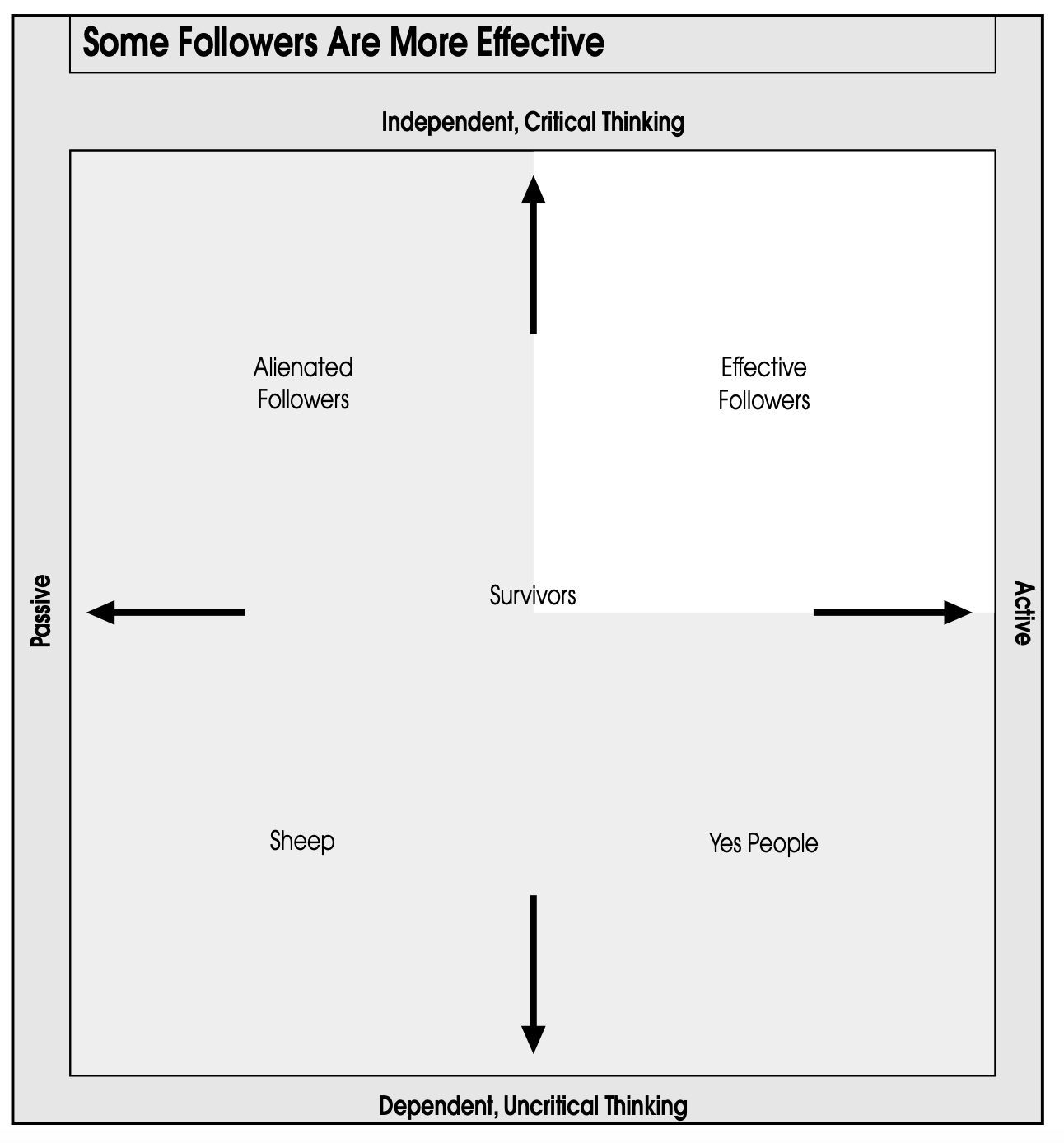
« Since followers with different motivations can perform equally well, I examined the behavior that leads to effective and less effective following among people committed to the organization and came up with two underlying behavioral dimensions that help to explain the difference.
One dimension measures to what degree followers exercise independent, critical thinking. The other ranks them on a passive/active scale. The resulting diagram identifies five followership patterns » (Kelley, 1988, p. 3)
- Sheep are passive and uncritical, lacking in initia- tive and sense of responsibility. They perform the tasks given them and stop.
- Yes People are a livelier but equally unenterprising group. Dependent on a leader for inspiration, they can be aggressively deferential, even servile.
- Alienated Followers are critical and independent in their thinking but passive in carrying out their role.
- Survivors, who perpetually sample the wind and live by the slogan “better safe than sorry.” They are adept at surviving change.
- Effective Followers, who think for themselves and carry out their duties and assignments with energy and assertiveness.
Raelin (2011) From leadership-as-practice to leaderful practice. Leadership.
A leaderful culture is not the accepted norm in the institutional environment conditioning most organizations. Pressures from all sides – internal normative as well as external economic and regulatory forces – converge to fortify a culture of dominance and control (Currie et al., 2009). Even when given the opportunity to direct an operation – and this includes such organizations as universities which are structured in their academics to be collegial and collaborative – managers by instinct await permission from the top of the hierarchy to assume responsibility and initiative (Bolden et al., 2009; Collinson and Collinson, 2009). Command-and-control leadership is seen in most of our cultures as clearer and more responsive to our anxiety regarding uncertainty and prospective failure (Grint, 2005). We tend to rely on concrete forms – leaders, followers, heroes – to give substantiality to our experience, while neglecting the more complex processual nature of most social phenomena (…)
The leaderful development process thus needs to be mobilized by internal or external change agents who can encourage the endorsement of a culture of learning and participation within the system in question. Change agency also needs to occur at multiple levels of experience, namely at individual, interpersonal, team, organization, and network levels (Raelin, 2010). Although members of a team or institution may be at a stage of readiness to assume leaderful properties, they may not choose to or know how to act leaderfully without some instigation from those bold enough to take action » (p. 205)
 Yoann Bazin