Theranos case study
- One group will focus on the early issues raised in Theranos. Based on Carreyrou’s (2015) Chapter 1 to 4, follow precisely how Ana Ariola and Avie Tevanian came to be concerned and how they voiced these concerns internally. List the other actors and organizations that were involved in the process of understanding the issues (see Template below). Analyze the reactions of the organization, Elizabeth Holmes in particular but also Don Lucas and other executive or board members for example. Map these encounters following the template below.
- One group will focus on Ian Gibbons. Based on Carreyrou’s (2015) Chapters 12, 14, 19 and 21, follow precisely how Ian Gibbons came to be concerned and how they voiced these concerns internally. List the other actors and organizations that were involved in the process of understanding the issues (see Template below). Analyze the reactions of the organization, Elizabeth Holmes in particular but also Sunny Balwany or the company’s lawyer for example. Map these encounters following the template below.
- One group will focus on Richard Fuisz Based on Carreyrou’s (2015) Chapters 5, 11, 18 and 19, follow precisely how Richard Fuisz came to be interested in Theranos and how he later voiced his concerns externally. List the other actors and organizations that were involved in the process of understanding the issues (see Template below). Analyze the reactions of the organization, Elizabeth Holmes in particular but also Sunny Balwany or the company’s lawyer for example. Map these encounters following the template below.
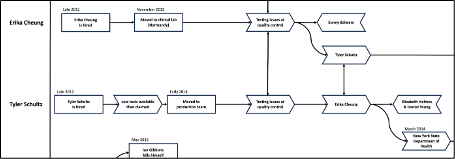
- One group will focus on Theranos’ most famous whistleblowers: Erika Cheung and Tyler Schultz. Based on Carrerou’s (2015) Chapter 16 to 21, follow precisely Erika Cheung and Tyler Schultz’s journeys in the company and how they came to encounter wrongdoings. List the other actors and organizations that were involved in the process of understanding the issues, defining them as wrongdoings and considering blowing the whistle. Map these encounters following the template below.
Template for the mapping out of interactions
- Confirmation: Place the interactions that contributed to moving the whistleblowing forward (confirmation, validation, encouragement, …) with the name of the person involved and the date
- Contradiction: Place the interactions that slowed down the whistleblowing process (challenges, counter-arguments, punishments, threats, …) with the name of the person involved and the date.
- See example below:
 Yoann Bazin